

What are the differences between cnc prototype and forging parts?
Hey there! I'm a supplier of CNC prototypes, and today I wanna chat about the differences between CNC prototypes and forging parts. These two manufacturing methods are quite distinct, and understanding their differences can help you make better decisions when it comes to your project needs.
1. Manufacturing Process
Let's start with how these two things are made.
CNC Prototypes
CNC, or Computer Numerical Control, is a super precise way of making parts. We start with a block of material, which can be metal, plastic, or even wood. Then, a computer-controlled machine uses cutting tools to remove material bit by bit until the desired shape is achieved. It's like sculpting, but instead of a chisel, we use high - tech cutting tools. The process is highly automated, and we can program the machine to make very complex shapes. For example, if you need a Cnc Machining Part Mount Bracket For Light Parts, the CNC machine can cut and shape it with extreme precision based on the design we input.
Forging Parts
Forging is an age - old process. It involves heating a piece of metal until it's malleable and then using compressive forces, like hammers or presses, to shape it. The metal is usually placed between two dies, and the force is applied to make the metal fill the shape of the dies. This process can create parts with a very strong internal structure because the metal grains are realigned during forging. For instance, large automotive parts like crankshafts are often made through forging because they need to withstand high stress.
2. Precision and Tolerance
CNC Prototypes
One of the biggest advantages of CNC prototypes is their precision. CNC machines can achieve very tight tolerances, often within a few thousandths of an inch. This means that the parts we make are very accurate and can fit together perfectly in an assembly. If you're working on a project where every millimeter counts, like in the aerospace or medical industries, CNC prototypes are a great choice. For example, an OEM Aluminum Cnc Milling Machine Part can be made with such high precision that it will function flawlessly in the machine.
Forging Parts
Forging, on the other hand, is not as precise as CNC machining when it comes to tolerances. The nature of the forging process, which involves high - force deformation, can lead to some variation in the final part dimensions. While modern forging techniques have improved a lot, achieving extremely tight tolerances is still a challenge. However, for parts where overall strength is more important than exact dimensions, forging is a good option.
3. Material Properties
CNC Prototypes
CNC prototypes can be made from a wide range of materials. We can work with metals like aluminum, steel, brass, and titanium, as well as plastics and composites. The material properties of the final part are mainly determined by the starting material. For example, if we use a high - strength aluminum alloy for a CNC - machined part, the part will have the inherent strength and corrosion - resistance properties of that alloy.
Forging Parts
Forging can also use a variety of metals, but it has a unique effect on the material properties. When metal is forged, its internal grain structure is refined and realigned. This can result in parts with better mechanical properties, such as higher strength, toughness, and fatigue resistance. For example, a forged steel part will generally be stronger than a CNC - machined steel part of the same shape because of the way the metal grains are arranged during forging.
4. Production Time
CNC Prototypes
CNC prototyping is relatively fast, especially for small - batch production. Once the design is programmed into the machine, we can start making parts right away. There's no need for expensive tooling, which can save a lot of time. If you need a quick turnaround for a few parts, like a Cnc Turning Machine Part, CNC machining is the way to go.
Forging Parts
Forging usually takes longer, especially for complex parts. First, we need to create the dies, which can be a time - consuming and expensive process. Then, the forging process itself can be slow, especially if multiple heating and shaping steps are required. However, for large - scale production, the time per part can become more reasonable once the initial setup is complete.
5. Cost
CNC Prototypes
For small - batch production, CNC prototypes are often more cost - effective. Since there's no need for expensive tooling, the upfront costs are low. However, as the production volume increases, the cost per part may not decrease as significantly as in forging. This is because the machining time per part remains relatively constant, and the cost of materials and machine operation adds up.
Forging Parts
Forging has high upfront costs because of the die - making process. But for large - volume production, the cost per part can be quite low. The cost savings come from the high - speed production and the fact that the dies can be reused many times.
6. Surface Finish
CNC Prototypes
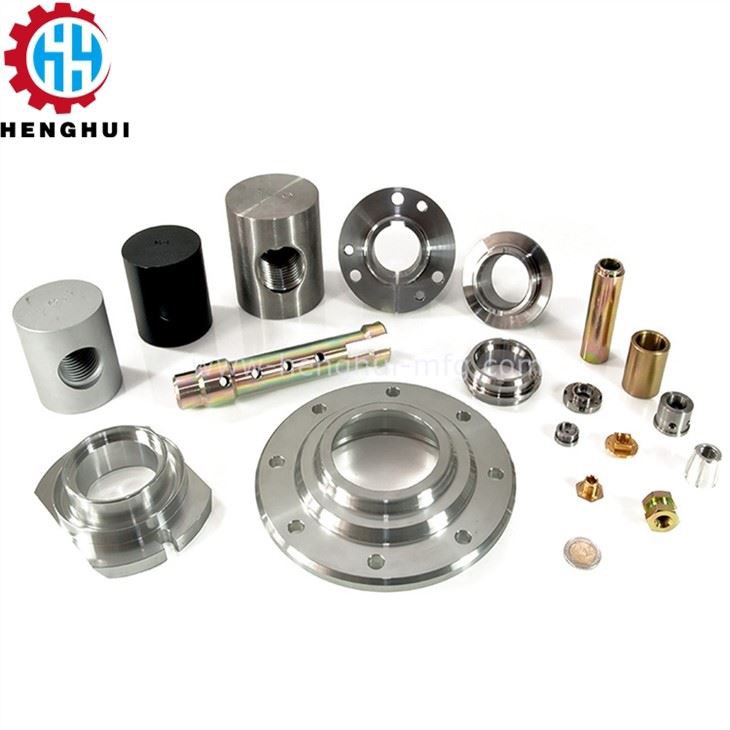

CNC machining can produce parts with a very good surface finish. The cutting tools can be selected and programmed to leave a smooth surface, and additional finishing operations like polishing can be easily applied if needed. This is important for parts that will be visible or need to have a low - friction surface.
Forging Parts
Forging parts usually have a rougher surface finish. The high - force nature of the forging process can leave marks on the surface. Additional finishing operations, such as machining or grinding, are often required to achieve a smooth surface.
7. Design Flexibility
CNC Prototypes
CNC machining offers a high degree of design flexibility. We can make almost any shape, no matter how complex, as long as the cutting tools can reach all the areas. This makes it ideal for prototyping new products where the design may change frequently.
Forging Parts
Forging has some limitations in terms of design flexibility. The part design needs to be suitable for the forging process, which means that sharp corners and undercuts are more difficult to achieve. The part also needs to be able to be ejected from the dies after forging.
In conclusion, both CNC prototypes and forging parts have their own strengths and weaknesses. If you're looking for high precision, fast turnaround, and design flexibility for small - batch production, CNC prototypes are a great choice. On the other hand, if you need parts with excellent mechanical properties and are planning large - scale production, forging might be the better option.
If you're interested in our CNC prototype services or have any questions about which manufacturing method is right for your project, feel free to reach out. We're here to help you make the best decision and get the parts you need.
References
- "Manufacturing Engineering & Technology" by S. Kalpakjian and S. R. Schmid
- "Modern Manufacturing Processes" by various industry experts