

What are the magnetic properties of CNC machined stainless steel parts?
Hey there! As a supplier of CNC stainless steel parts, I often get asked about the magnetic properties of these parts. It's a super interesting topic, and I'm excited to share what I know with you.
First off, let's talk a bit about what CNC machining is. CNC, or Computer Numerical Control, is a process that uses pre-programmed computer software to control the movement of factory tools and machinery. When it comes to stainless steel, CNC machining can create parts with high precision and excellent surface finish. Now, onto the magnetic properties.
Stainless steel is an alloy mainly composed of iron, chromium, and sometimes other elements like nickel, molybdenum, etc. The magnetic properties of stainless steel depend a lot on its microstructure and composition. There are different types of stainless steel, and each type has different magnetic characteristics.
Austenitic Stainless Steel
Austenitic stainless steels are the most common type used in CNC machining. They typically contain high levels of nickel and chromium. These steels are non - magnetic in their annealed (heat - treated) state. For example, the popular 304 and 316 stainless steels fall into this category.
The reason for their non - magnetism is the face - centered cubic (FCC) crystal structure they have. This structure doesn't allow for easy alignment of magnetic domains, which are like tiny magnets within the material. However, things can get a bit tricky. When austenitic stainless steel is cold - worked, like during some CNC machining processes such as turning or milling, the crystal structure can change locally. This change can cause the material to become slightly magnetic in the areas that have been cold - worked.
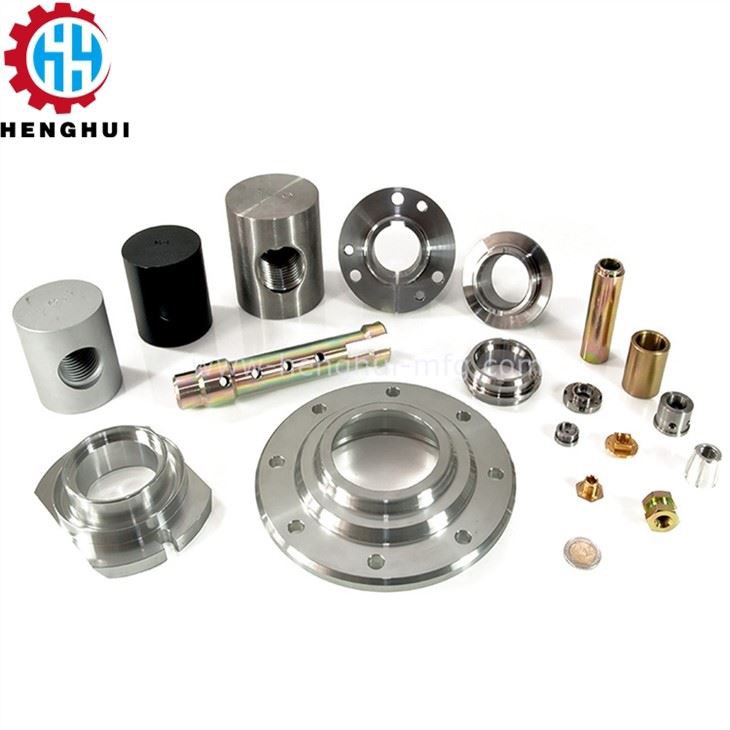
Imagine you're using a CNC Precision Turning Parts process on a 304 stainless steel bar. As the cutting tool removes material and applies pressure, the cold - working effect might make the surface of the part a bit magnetic. But don't worry too much, this magnetism is usually very weak and might not affect most applications.

Ferritic and Martensitic Stainless Steel
Ferritic and martensitic stainless steels, on the other hand, are magnetic. Ferritic stainless steels have a body - centered cubic (BCC) crystal structure. This structure allows for the easy alignment of magnetic domains, making the material magnetic. They usually have lower nickel content compared to austenitic steels. For example, 430 stainless steel is a ferritic stainless steel commonly used in some CNC machining applications.
Martensitic stainless steels are also magnetic. They are heat - treatable and have a different crystal structure compared to austenitic and ferritic steels. The martensitic structure is formed by rapid cooling during heat treatment. These steels are often used when high strength and hardness are required, like in some Cnc Turning Machine Part applications where the parts need to withstand high stress.
Why Does It Matter?
The magnetic properties of CNC machined stainless steel parts can be crucial in different applications. In the electronics industry, for instance, non - magnetic parts are often required to avoid interference with magnetic fields. If you're manufacturing Copper CNC Turning Parts For Electronics, you might also use stainless steel components that need to be non - magnetic.
In the food and beverage industry, non - magnetic stainless steel parts are preferred because they are less likely to attract metal particles, which could contaminate the product. On the other hand, in some engineering applications where magnetic properties can be used for holding or positioning parts, ferritic or martensitic stainless steels might be the better choice.
Testing the Magnetic Properties
As a supplier, we often test the magnetic properties of our CNC machined stainless steel parts. There are simple ways to do this. One common method is to use a small handheld magnet. If the magnet sticks strongly to the part, it's likely a ferritic or martensitic stainless steel. If it only has a very weak attraction or no attraction at all, it's probably an austenitic stainless steel.
However, for more accurate testing, we might use a magnetic permeability meter. This device can measure the degree to which a material can be magnetized. It gives us a more precise understanding of the magnetic properties of the part, which is especially important for applications with strict magnetic requirements.
Impact of Machining Parameters
The machining parameters we use in CNC machining can also affect the magnetic properties. For example, the cutting speed, feed rate, and depth of cut can all influence the amount of cold - working that occurs during the process. If we use a high cutting speed and a low feed rate, we might reduce the cold - working effect and minimize any potential increase in magnetism for austenitic stainless steels.
As a supplier, we carefully select the machining parameters based on the type of stainless steel and the requirements of the final application. This way, we can ensure that the parts we produce meet the desired magnetic properties.
Conclusion
So, there you have it! The magnetic properties of CNC machined stainless steel parts depend on the type of stainless steel, the machining processes involved, and the final application. Whether you need non - magnetic parts for electronics or magnetic parts for engineering applications, we, as a CNC stainless steel parts supplier, can provide the right solutions.
If you're in the market for high - quality CNC machined stainless steel parts and have specific magnetic property requirements, don't hesitate to reach out. We can discuss your needs in detail and offer the best products for your project. Let's start a conversation about how we can meet your CNC stainless steel part needs!
References
- ASM Handbook Volume 1: Properties and Selection: Irons, Steels, and High - Performance Alloys
- Callister, W. D., & Rethwisch, D. G. (2010). Materials Science and Engineering: An Introduction.